How to judge shower screen installers in London
Shower screens rarely fail because the glass was wrong. They fail because nobody checked the walls, nobody agreed who was sealing what, and nobody came back. This page is about telling a competent fitter from a confident one before you pay a deposit.
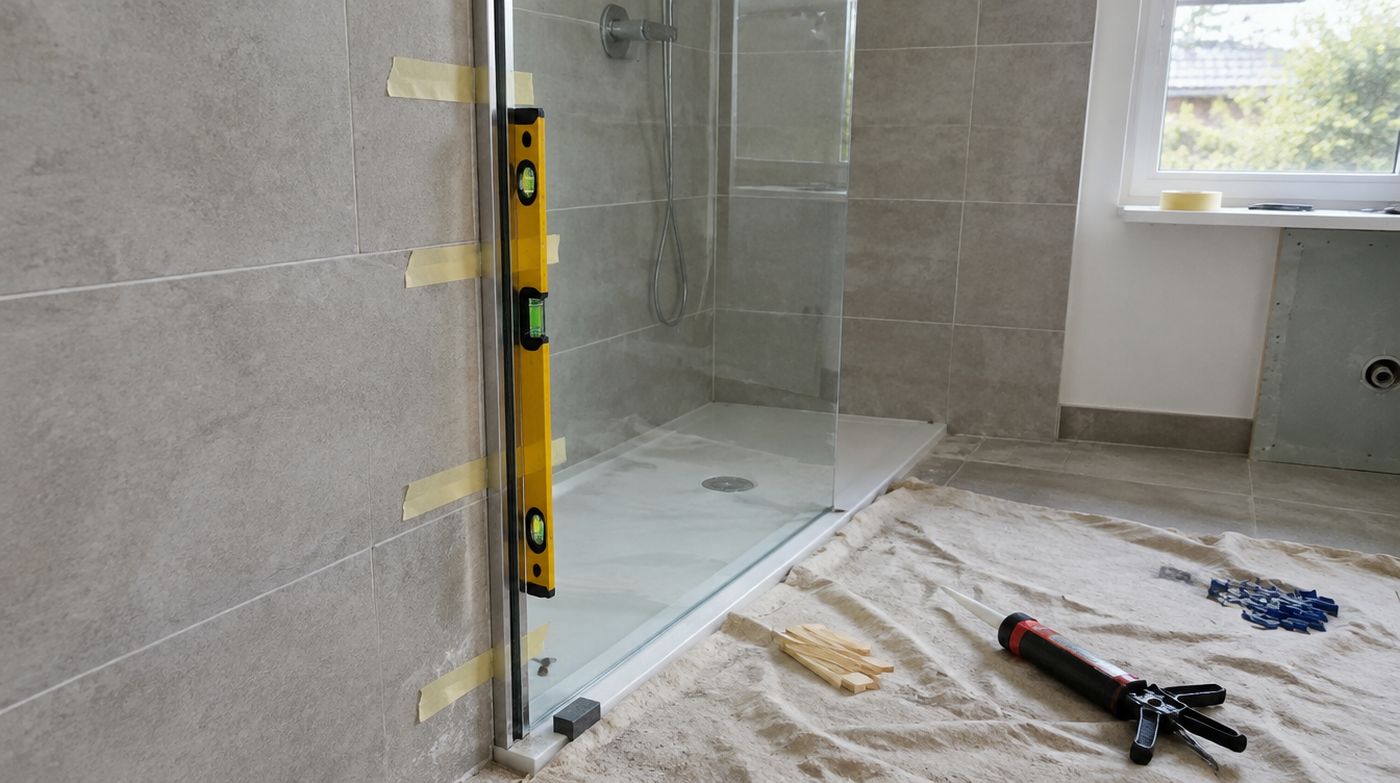
How do you judge the shower screen installers London has to offer?
Almost all the shower screen installers London homeowners can choose between are buying glass from the same small number of processors and hardware from the same catalogues. The 8mm toughened panel in a cheap quote and the 8mm toughened panel in an expensive one are frequently the same product. What you are actually buying is the survey, the accuracy of the sizes, the quality of the fixings into whatever is behind your tiles, the sealing, and whether anyone answers the phone a year later when a clamp needs a quarter turn.
The shower screen installers London homeowners are happiest with are not the ones with the glossiest brochure, so judge the people and the process. The glass specification is the easiest part of this job to get right and the least likely thing to go wrong.
What a survey has to cover before anyone can quote
A proper survey takes twenty minutes or so, and with competent shower screen installers London wide most of that time goes on the walls and the floor rather than on colour choices. Expect a level held against both walls that the screen touches, and expect to be told what it reads. Expect widths and heights taken in at least three places, both diagonals on a tray, and a straight edge laid across the tiling to find the bow. Out of plumb and out of square walls are the normal case in London housing, not the exception, and they are only a problem when nobody measures them.
The surveyor should also establish what is behind the tiles, because that decides the fixings. Solid brick, block, a timber stud with noggins, a stud without noggins, old lath and plaster, or tile board over a patch of all four is a real range in one Victorian bathroom. They should look at the tray upstand, the tile thickness, the shower head and valve positions, the ceiling height, and the route from the front door to the bathroom for a panel that may weigh 40 to 50kg. On a second floor flat in a Georgian or Victorian conversion, that route is part of the job.
A quote produced entirely from sizes you have supplied over email is a guess, and the risk of it being wrong is transferred to you. There are jobs where that is a reasonable trade, usually a simple replacement in a modern bathroom. There are many more where it is how people end up with a panel they cannot use.
When something leaks, whose problem is it?
This is the question that causes the arguments, and it is worth settling in writing before work starts. The waterproofing of a shower is not the glass company’s product. The tanking, the fall of the floor, the tray installation and the tiling belong to the bathroom fitter or the tiler. The screen, its fixings and the seal between the glass and the finished surfaces belong to whoever fits the screen. We have written separately about why a glass fitter cannot own the waterproofing, so the point here is purely about risk.
If one firm is doing the whole bathroom, that boundary disappears and you have a single party responsible, which is worth paying for. If you are co-ordinating trades yourself, write down who seals the glass-to-tray junction, who makes good any tile damage around a fixing, and who returns if the junction fails. When a leak appears in a split-responsibility job, the default outcome is two trades blaming each other and a homeowner paying a third to find out.
Insurance, registration and what each one actually proves
FENSA registration applies to replacement windows and doors and the building regulations that cover them. It is a genuine credential and we hold it, and it has nothing whatsoever to do with an internal shower screen. Anyone leading with it as a reason to buy a screen is showing you a certificate for a different job.
What is worth checking: public liability insurance, with a sight of the certificate and the cover figure, because a dropped panel in a finished bathroom is an expensive accident. A company number and a VAT number you can look up, and an address that is premises rather than a mailbox. A written workmanship guarantee in the name of a trading company that has existed for more than a few months. And glass supplied as toughened safety glass to BS EN 12150, with the stamp still visible on the installed panel, which is also how you verify after the fact that you got what you paid for.
Warning signs on a survey visit and in a quote
Some of these are judgement calls. Several together are a pattern.
- No level and no straight edge come out of the van, or sizes are rounded to the nearest 10mm.
- Nobody asks where the shower head and valve are, or what is behind the tiles.
- A discount that expires if you do not sign during the visit.
- A large deposit requested in cash, or payment to a personal account rather than a company one.
- A quote that names no glass thickness, no panel sizes, no hardware finish and no allowance for out of square walls.
- Vague coverage of sealing and making good, usually phrased as sorting it out on the day.
- An unwillingness to say where the glass is processed and toughened.
- A promise to fit next week on a made to measure panel, which generally means it is not made to measure.
What a bad shower screen fit looks like a year later
The failures are consistent enough to list. Silicone blackened and lifting, usually because it was applied over a damp or dusty joint, or applied on the wrong face so water sits behind the bead instead of draining back into the tray. A hinged door that no longer stays where you leave it because the panel was never set plumb. Weeping rust around a clamp where a cheap fixing was used in a wet environment. A tile cracked during drilling, grouted over and hidden under a cover plate, with the fixing now holding into nothing.
Then there is the retro-fitted stabilising bar, screwed across a panel some months after installation. Occasionally that is a sensible remedy. More often it is evidence that the panel was never properly restrained at the wall, and the bar is covering for a fixing that should have gone into something solid. If a fitter proposes a bar on a visit after the job, ask what has changed since the survey.
Fitting into a bathroom refit without losing a week
In a London bathroom refit the glass is nearly always the last thing in, and it cannot be ordered until the tiling is finished, because made to measure means made to the finished surfaces. That creates a gap in the programme of several days between the tiler leaving and the screen arriving, and the common mistake is not allowing for it. Plan the sequence backwards from the screen and tell your builder when the final measure needs to happen.
Access is the other thing people underestimate. A glass panel does not bend round a half landing. Controlled parking zones across Islington, Camden, Lambeth and Hammersmith mean a van cannot simply sit outside for two hours, so somebody has to arrange a bay or a permit, and that is worth asking about rather than discovering on the day. In a mansion block, the porter or managing agent may require notice, insurance details and a goods lift booking before anyone carries glass through the entrance hall.
Deposits, payment and what to hold back
A deposit on made to measure glass is reasonable, because a panel cut to your sizes with holes in your positions is worth nothing to anybody else. A deposit covering the whole job is not. Pay for materials, keep a meaningful balance until the screen is fitted, sealed and you have watched water run down it. Pay by card or bank transfer to a company account so there is a record, and get the VAT shown separately if the company is registered.
One last piece of honest advice. If your existing enclosure has a worn seal, a stiff roller or a hinge that has dropped, you probably do not need a new screen or a new installer. Those are stock parts costing a few pounds, and a competent fitter can usually identify the model from the profile. Replacing an entire enclosure to cure a £6 magnetic strip is the most common avoidable spend in this trade.
FAQ
Questions about shower screen installers london
Do shower screen installers need to be registered or certified in the UK?
There is no mandatory registration scheme for fitting an internal shower screen, which is why credentials get waved about loosely. FENSA and similar schemes cover replacement windows and doors, not shower glass. What genuinely matters is public liability insurance, a traceable company, a written workmanship guarantee, and glass that is toughened safety glass to BS EN 12150 meeting BS 6206 Class A, with the stamp visible on the installed panel. Ask for the insurance certificate and the company number, look them up, and treat any unrelated badge as decoration rather than assurance.
Should a shower screen be measured before or after tiling?
After. A made to measure screen is cut to the finished surfaces, so the final measure happens once the tiling is complete, the tray is in and sealed, and the walls are in their final state. Measuring to bare plaster and adding an allowance for tile thickness sounds reasonable and goes wrong, because tiles vary and adhesive beds vary more. Build a gap of several days into the programme between the tiler finishing and the glass arriving. Pre-tiling is the right time to decide the screen position and get noggins or a plywood pattress in behind the board.
What should a shower screen quote include?
It should name the glass type and thickness, every panel size, the edge finish, the hardware and its finish, and any cutouts or hole positions. It should say who seals the glass to the tray or floor and who makes good tiling disturbed by fixings. It should say what happens if the walls prove further out of plumb than the survey found. It should set out the deposit, the balance and the workmanship guarantee in writing. A quote that is a single line and a price is not a quote, it is a number.
Get a price for your shower screen
Tell us roughly the size of the opening, or book a free survey. Most screens are measured, made and fitted within a week.